Service
Garden Development
Turn bare land into a mature, healthy garden — earthwork, soil preparation, lawns, planting and irrigation, executed or supervised end to end.
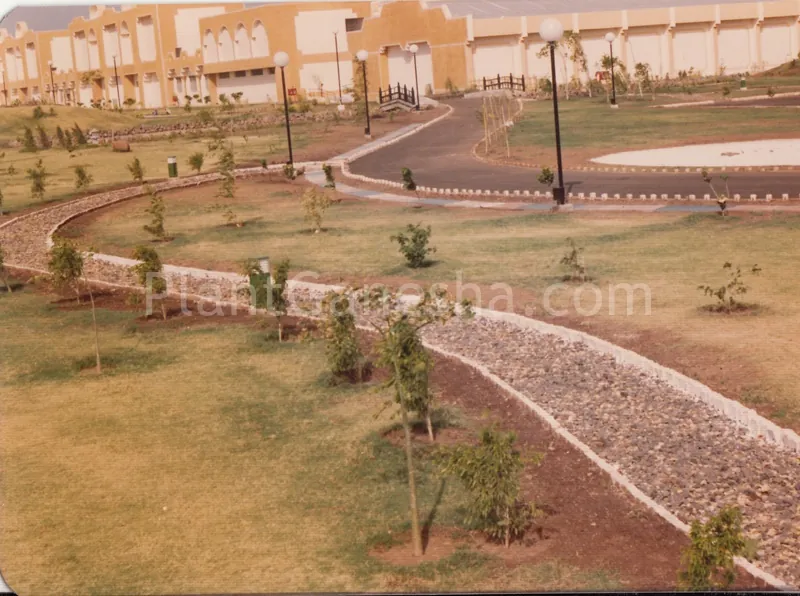
Garden development is where most landscape projects succeed or fail. Poor soil preparation, wrong plant sizes or a rushed lawn can mean years of patchy growth. Ganesh Patel has taken more than 200 acres from bare land to established landscapes, and brings the same discipline to every site.
How a garden is developed
- Ground preparationClearing, levelling, drainage slopes and removal of construction debris.
- Soil buildingRed soil, manure and organic compost mixed to the right depth for lawns and beds.
- Irrigation firstMains, valves and laterals laid before planting so every zone gets the right water.
- Planting & lawnsTrees, hedges, shrubs and groundcover planted at correct depth and spacing; lawns laid and established.
- Establishment careWatering, feeding, gap-filling and pest control until the garden is self-sustaining.
Proven at scale
- Birla Century, Bharuch — 34-acre lawn and 15-acre plantation with 1,600+ ornamental trees, 55,000 shrubs and 9,000 m of hedges, built from scratch.
- SEL Manufacturing, Sehore — 45 acres of ornamental gardens from bare land, including a 12,000 sq m rock garden.
- Century Yarn & Denim, Khargone — 80,000 sq m of lawn and 15,000 trees across a 105-acre estate.
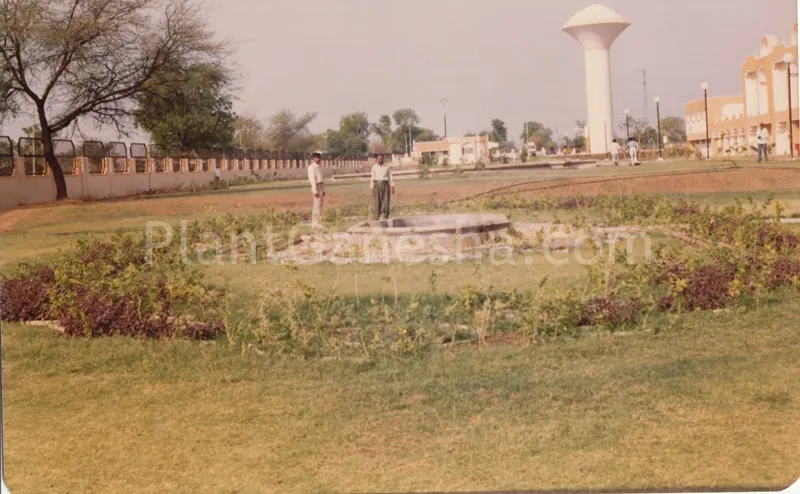
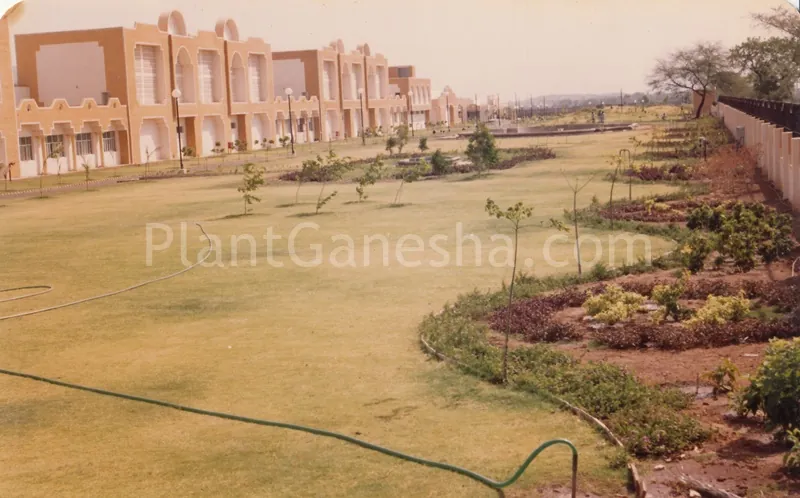
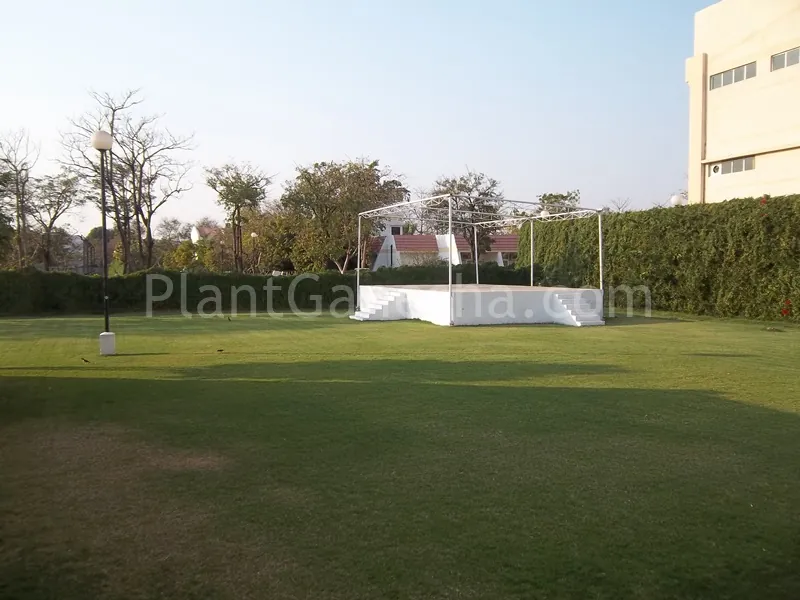
The Century campus at Khargone — from new paths and young planting in the 1990s to mature lawns a decade later.
Frequently asked questions
How long does it take to develop a garden?
A home garden can be planted in a few weeks; a campus or township is usually developed in phases over several months. The best planting window in central India is just before and during the monsoon.
Do you supply plants?
Plants are sourced from trusted nurseries and checked for quality before planting. For large sites an on-site nursery can be set up for propagation and gap-filling, which saves significant cost.